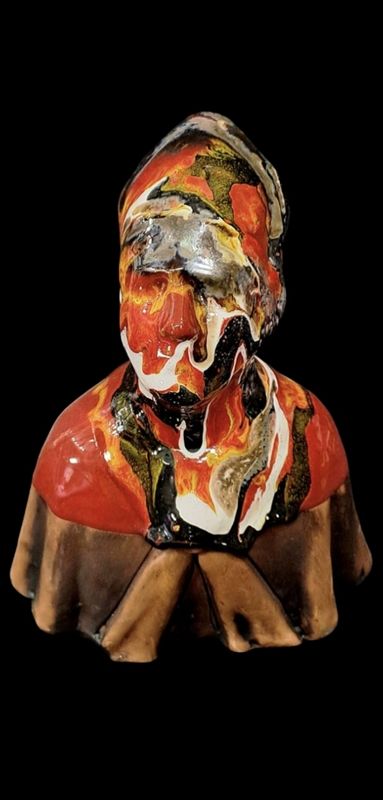
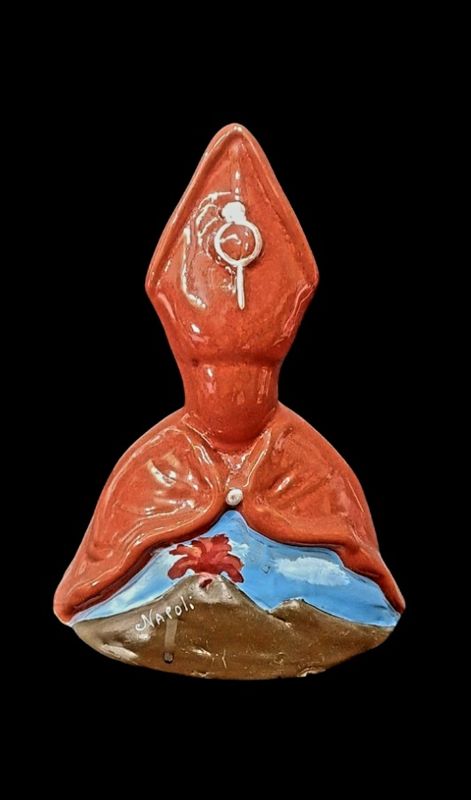
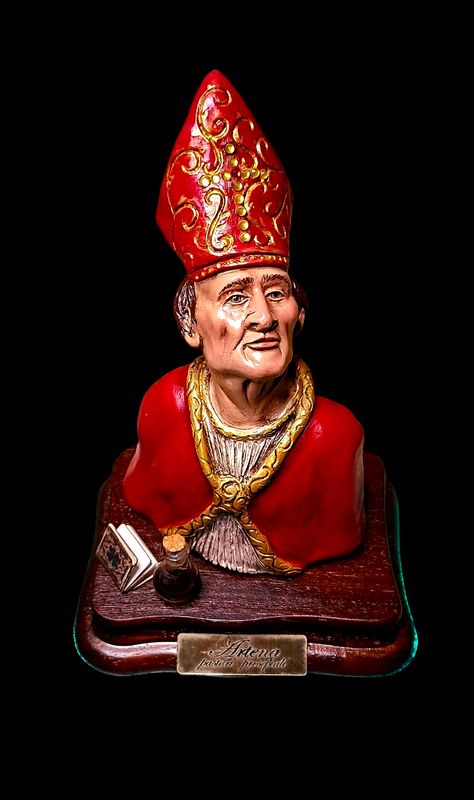
Saint Gennaro Bust
On the evening of December 16, 1646, three days after the inauguration of the Royal Chapel of the Treasury of San Gennaro and on the occasion of the third miracle of the liquefaction of the blood of San Gennaro, the gold reliquary bust of San Gennaro, dating back to 1305, was transferred from the old chapel of the Treasury to the new one. The bust was commissioned from master goldsmiths Etienne Godefroy, head of the court goldsmith's workshop, Guillaume de Verdelay, and Milet d'Auxerre, by King Charles II of Anjou for the ceremonies marking the thousandth anniversary of the martyr's beheading in 305 AD. Thirty-one oncees and eleven tarì were paid for between July 10 and August 31, 1304. The exquisitely crafted figure was crafted from silver and gold and adorned with a rich chasuble set with precious stones and enamels depicting the Angevin heraldic insignia. In 1712, the Deputation of the Royal Chapel of the Treasury decided to adorn the reliquary bust with a gold and silver miter (or miter), entrusting the creation to Neapolitan goldsmith Matteo Treglia. After just one year of work, in 1713, he delivered a masterpiece comprising approximately 3,694 diamonds, emeralds, and rubies. The miter is considered one of the ten wonders of the Treasure of San Gennaro and one of the most precious objects in the world.
The bust of San Gennaro is usually displayed in the chapel of the same name in the Naples Cathedral and, in some cases, is kept in a silver safe donated by Emperor Charles II of Spain in 1667, the same one that houses the case containing the ampoules containing the blood relic. The saint's bones were stolen by the Lombard prince Sicone I of Benevento in the 9th century and brought to Benevento, while part of the skull remained in Naples, which the three Provençal artists enclosed in the skullcap, with a special opening that still houses the relics today.
Display prices in:EUR